Sacred India
Tirupati — the temple, the queue, and the hair
One of the most visited temples anywhere, run at a scale that has more in common with an airport than a shrine.
The short answer
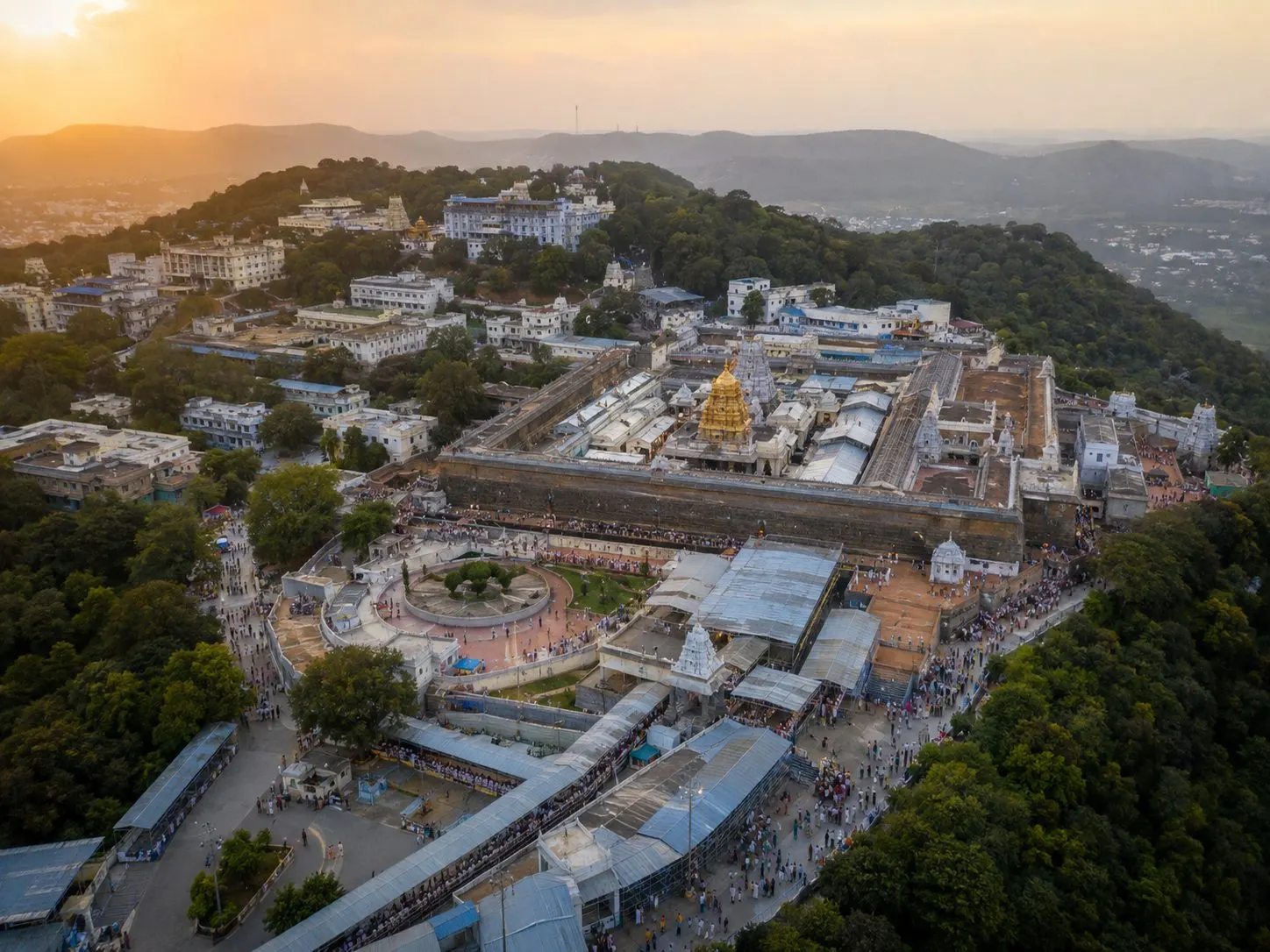
Tirumala Venkateswara temple sits on a hill above Tirupati in Andhra Pradesh and receives tens of thousands of pilgrims daily. Darshan runs through a slot-and-ticket system that has to be arranged before you arrive, not on the day; many devotees shave their heads as an offering; and the temple's hundi takes in donations on a scale few religious institutions match.
Key facts
- The deity
- Venkateswara, a form of Vishnu; also called Balaji and Srinivasa
- Where
- Tirumala, on the Tirumala hills above Tirupati, Chittoor district, Andhra Pradesh
- Administered by
- Tirumala Tirupati Devasthanams (TTD), a state-constituted board
- Scale
- Daily footfall in the tens of thousands, and far higher on festival days. It is often called the most visited temple in the world; no authority publishes a ranking, and Kashi Vishwanath and Ayodhya are now claimed above it
Before you go
- darshan
- Four routes — Slotted Sarva Darshan (free, but requires a timed token collected in Tirupati before going up the hill), paid Special Entry, Divya Darshan for those who walk up, and a separate queue for the disabled and elderly. Waits run from about two hours to well over twenty on the free queue
- dress
- Traditional dress expected; men in dhoti or trousers with shirt, women in saree or salwar. The temple publishes its own code
- the hill
- Reachable by road or by walking the stepped path, about 3,500 steps, which many pilgrims take as part of the vow
- laddu
- The temple's prasadam laddu is issued against your darshan ticket and is a GI-registered product
Timings and rules at living temples change, and are set by the temple, not by us. Check with the temple before travelling.
Why people come
The story, in brief: Vishnu descended to the Tirumala hills and remained there, and the deity in the sanctum is understood as present rather than representative. Devotees come to see him — darśana, the sight — and to discharge vows made in return for something asked for.
The vow is central to understanding the place. A very large proportion of the people in the queue are there because they said they would come, and the shaving, the walk up the steps and the donation are the fulfilment.
The scale
This is the part visitors are least prepared for. Tirumala handles crowds on the scale of a major transport hub, continuously, and its systems reflect that: numbered queue compounds with seating and water, timed entry tokens, an online booking system, accommodation run by the temple board, and a free meal service running around the clock.
The darshan itself takes seconds. You move past the sanctum in a moving line, you see the deity, and you are moved on. People who expect a contemplative pause find this jarring; devotees generally do not, because the point is the sight rather than a period of dwelling.
Practical
- Book months ahead, not days. TTD releases paid darshan tickets and rooms online well in advance, and they go within minutes of the window opening. Check TTD's own site for the current release schedule before planning dates; it is the difference between a manageable day and a very long one.
- Collect a token before you go up. The free Slotted Sarva Darshan queue works on timed tokens issued at counters in Tirupati, not at the temple. Going up the hill without one is the usual way a pilgrimage turns into a twenty-hour wait.
- The walk. The stepped path from Alipiri is around 3,500 steps and takes most people three to five hours. Luggage can be sent up separately. Many pilgrims do it barefoot as part of the vow.
- Dress conservatively. The temple publishes a dress code and it is enforced at the entrance.
- Expect to leave things behind. Phones, cameras and leather are restricted, with lockers provided.
- The laddu is issued against your ticket and is genuinely a thing people travel with — it holds up for days and is distributed at home.
How this changes across the great South Indian temples
| Temple | What differs |
|---|---|
| Tirumala Venkateswara | Vaishnava; the largest managed pilgrimage operation in the country, with a declaration required of non-Hindus. |
| Madurai Meenakshi | Shaiva–Shakta; open to all, architecturally spectacular, and a working city temple rather than a hilltop destination. |
| Guruvayur, Kerala | Vaishnava; entry restricted to Hindus, strict dress code including bare chest for men, and a famous queue. |
| Sabarimala | Seasonal, requiring a 41-day vow before travel, and the subject of a major legal controversy over the entry of women of menstruating age. |
| Srirangam | The largest functioning temple complex in India by area, and the centre of Śrīvaiṣṇava tradition. |
Questions people ask
Why do people shave their heads?
It is an offering — a vow fulfilled, and a gesture of surrendering vanity along with the hair. Men, women and children do it, in a dedicated building with hundreds of barbers working shifts. The hair is collected by the temple and auctioned, mainly into the international hair trade, and the proceeds fund the institution.
How long is the wait for darshan?
Anywhere from about two hours on a paid ticket to well over twenty on the free queue, depending on the day and the season. Two things matter more than anything else you can do. Paid darshan tickets and TTD accommodation are released online months in advance and are taken within minutes of opening, so a booking is something to plan a trip around rather than arrange the week before. And the free Sarva Darshan queue is not a queue you simply join: it runs on timed slot tokens issued down in Tirupati, so arriving at the top of the hill without one is the common way a day goes wrong. Even after all that, the sight of the deity lasts a few seconds — the queue moves continuously past the sanctum.
Can non-Hindus enter?
The temple requires non-Hindus to sign a declaration of faith in the deity before entering. This is the temple's own rule and is enforced.
What is the hundi?
The donation vessel in the temple, into which offerings of cash, gold and other valuables are made. The amounts are very large and are counted continuously; the institution funds hospitals, educational trusts and free meals from them.
Sources (2)
- Tirumala Tirupati Devasthanams published pilgrim information — For queue types, dress code, the current booking schedule and the declaration required of non-Hindu visitors — all of which change and should be checked before travel
- Purāṇic accounts of Venkateswara and the Tirumala hills — For the traditional narrative of the deity's presence there
Fact-checked by Ajay Gupta on 7 September 2026.
Something wrong here? Tell us — corrections are made in the open, and our editorial standards set out what checking a page involves.