Festivals
Festivals of India — what they mark, and how they are kept
There is no single Indian festival calendar and no single way of keeping a festival. That is not a complication to get past — it is how the year makes sense.
7 pages
If you grew up around Indian festivals, you may know the sequence without knowing the explanation.
You know when the sweets appear. You know somebody will ask whether the diya has been lit. You may know that Navratri means garba to one friend, Durga Puja to another and golu to somebody else. You may even have celebrated Diwali for years without ever asking why a Bengali family you know is doing Kali Puja on the same night.
That is not unusual. A great deal of Indian festival life is learned by doing first and asking questions later.
The useful starting point is this: there is no single Indian festival calendar, and there is no single Indian way of keeping a festival. Dates may come from lunar or solar reckoning. Regional calendars may name months differently. The same sacred season can produce very different practices in Gujarat, Bengal, Tamil Nadu or Maharashtra.
Those differences are not complications to get past. They are how the festival year makes sense.
Why Indian festival dates keep moving
If Diwali was in November one year and October the next, nobody moved the festival.
Many Hindu observances are tied to a tithi, a lunar day, rather than to a fixed Gregorian date. A tithi does not begin at midnight or last exactly twenty-four hours. The local time at which it begins and ends matters, which is why the same panchang calculation cannot simply be copied from Delhi to New Jersey.
Regional month systems add another layer. North Indian Pūrṇimānta and South-and-Western Amānta reckoning can give the same festival different month names without changing the night on which it is observed.
The festival calendar explains tithi, Amānta and Pūrṇimānta, the regional solar calendars, location, and why two legitimate calendars can sometimes disagree. It deliberately explains the reckoning rather than publishing a wall of dates that has not been computed and checked for a stated place.
Why the same festival can look completely different
Ask four families what Navratri looks like and you may get four answers.
In Gujarat, the evening may revolve around garba. In Bengal, the autumn period is dominated by Durga Puja. In many Tamil households, a stepped golu display fills part of the home. In parts of North India, the same stretch of the calendar leads through Ramlila toward Dussehra.
That does not mean one family is doing Navratri properly and the others are doing regional versions of it. Festival traditions developed inside different languages, devotional movements, temple worlds, courts, agricultural cycles and household customs.
So a better question than "how do Indians celebrate this?" is often: "how does my family's region keep it?"
Diwali — one festival period, several ways of keeping it
Diwali is a good place to see this clearly.
Across much of North and West India, people recognise a wider sequence around Dhanteras, the principal Diwali night, Govardhan Puja or Annakut, and Bhai Dooj. But the shape and emphasis are not identical everywhere.
Bengal is an important example. Many Bengali households observe Kali Puja on the same amāvasyā night. It should not simply be flattened into "Bengali Diwali": the calendrical overlap is real, but the worship and religious focus are different.
That one night can therefore mean different things in different homes without either family being mistaken.
The Diwali guide explains the regional traditions, the multi-day sequence, and why a single one-line origin story does not work.
Navratri is not only the autumn festival
When people say Navratri they usually mean the autumn Sharada Navratri. But there is also a major Chaitra Navratri in spring.
That matters because Rama Navami falls on the ninth lunar day of the Chaitra Navratri period. If you grew up thinking of Rama Navami as one festival and Navratri as something that happens only in September or October, the calendar hides a relationship that is easier to see once the two are placed together.
The autumn Navratri is also where regional forms become most visible. Gujarat's garba, Bengal's Durga Puja and South Indian golu traditions belong to the same broad sacred season without becoming the same observance. UNESCO inscribed Garba of Gujarat on the Representative List of the Intangible Cultural Heritage of Humanity in 2023.
The Navratri guide goes further into the spring and autumn cycles and the regional forms.
Holi is more than the morning with colour
If your memory of Holi is mostly powder, water and ruined clothes, you have seen only the most visible part.
The evening before is commonly marked by Holika Dahan, a bonfire observance. The next day brings the colour play most people simply call Holi. In Braj — the Mathura, Vrindavan and Barsana region — Krishna traditions stretch the season into a longer sequence of local celebrations.
Holi can therefore carry several things at once: a spring festival, a bonfire tradition, Krishna-centred regional practices, and a day on which ordinary social rules become unusually loose.
The Holi guide separates those layers rather than forcing them into one explanation.
Ganesh Chaturthi — the public festival has a real modern history
One sentence gets repeated constantly: "Tilak started Ganesh Chaturthi in 1893."
It is too neat.
Ganesha worship long predates the 1890s, and public Ganapati activity in Pune is documented before Tilak's campaign. The anthropologist Raminder Kaur examines the later legend that made Tilak the single founder, while the historian Richard Cashman traces how Tilak used and expanded the public Ganapati festival as part of mass politics in Maharashtra.
The safest distinction is between an older religious observance and the organised sarvajanik neighbourhood form that grew rapidly in Pune during the early 1890s. Tilak was enormously important to its expansion and its political significance. He did not invent Ganesha worship, or the idea of celebrating Ganesha in public.
The Ganesh Chaturthi guide covers installation, household observance, public mandals, visarjan and the modern immersion problem.
Janmashtami — why the night matters
Janmashtami commemorates Krishna's birth, and the central observance is associated with midnight.
That makes timing unusually visible. Families may fast through the day, temples remain active late into the night, and the birth celebration reaches its high point around midnight. In some years, different Hindu calendrical traditions arrive at different observance dates because they apply the relevant lunar and stellar conditions differently.
In Maharashtra, Dahi Handi is commonly associated with the following day rather than being another name for the midnight Janmashtami observance.
The Janmashtami guide explains the midnight observance, the date-reckoning problem and the regional differences.
Maha Shivaratri does not look like the festival stereotype
No colours. No daytime feast at the centre. No assumption that the main event happens while everyone is awake anyway.
Maha Shivaratri is centred on the night. Fasting, temple worship and an overnight vigil are common features, with worship often organised into successive portions of the night.
That different shape is useful, because it breaks the easy idea that an Indian festival always means a procession, a feast and a crowded daytime celebration.
The Maha Shivaratri guide explains the night vigil, the worship sequence and the regional differences.
Makar Sankranti, and the different new years
Not every important festival has a full page here yet, but some relationships are worth seeing now.
Makar Sankranti is a solar observance tied to the Sun's entry into the sidereal sign of Makara. It is often casually described as the winter solstice, and that is not correct in the modern astronomical calendar: the December solstice and the sidereal Makara transition no longer occur together.
India also has more than one traditional new year. Ugadi and Gudi Padwa belong to the Chaitra lunar new year season, while Puthandu, Vishu, Poila Boishakh and Bohag Bihu belong to a mid-April solar cluster.
These are not six names for one national new year. They come from different regional calendar traditions, and the festival calendar explains the systems underneath them.
Not everything on the religious calendar is a celebration
The English word festival can be misleading.
Kumbh Mela is often placed in festival lists, but it is more useful to understand it primarily as a recurring pilgrimage and ritual gathering centred on sacred bathing at designated river sites. UNESCO inscribed Kumbh Mela on the Representative List of the Intangible Cultural Heritage of Humanity in 2017, but its lived structure is tied to pilgrimage and sacred geography.
Muharram creates the opposite problem. Ashura observances connected with Karbala are acts of mourning and commemoration for many Muslims, especially in Shia traditions. Calling that simply a festival distorts what the observance means.
Those two examples are a useful warning: a list of Indian "festivals" can put very different religious acts into one English category.
Every festival above has its own guide, listed below. For the deities themselves rather than the festivals around them, see Hindu gods.
New to this? Start with these three
- DiwaliWhat Diwali commemorates, why the reason differs by region, what happens on each of the five days, and how it is kept in households outside India.
- NavratriWhat Navratri marks, and why Gujarat's garba, Bengal's Durga Puja and Tamil Nadu's golu are the same nine nights kept in entirely different ways.
- Festival calendarWhy Indian festival dates move every year, how the lunisolar calendar works, and why two calendars can disagree in the same year.
Everything in Festivals
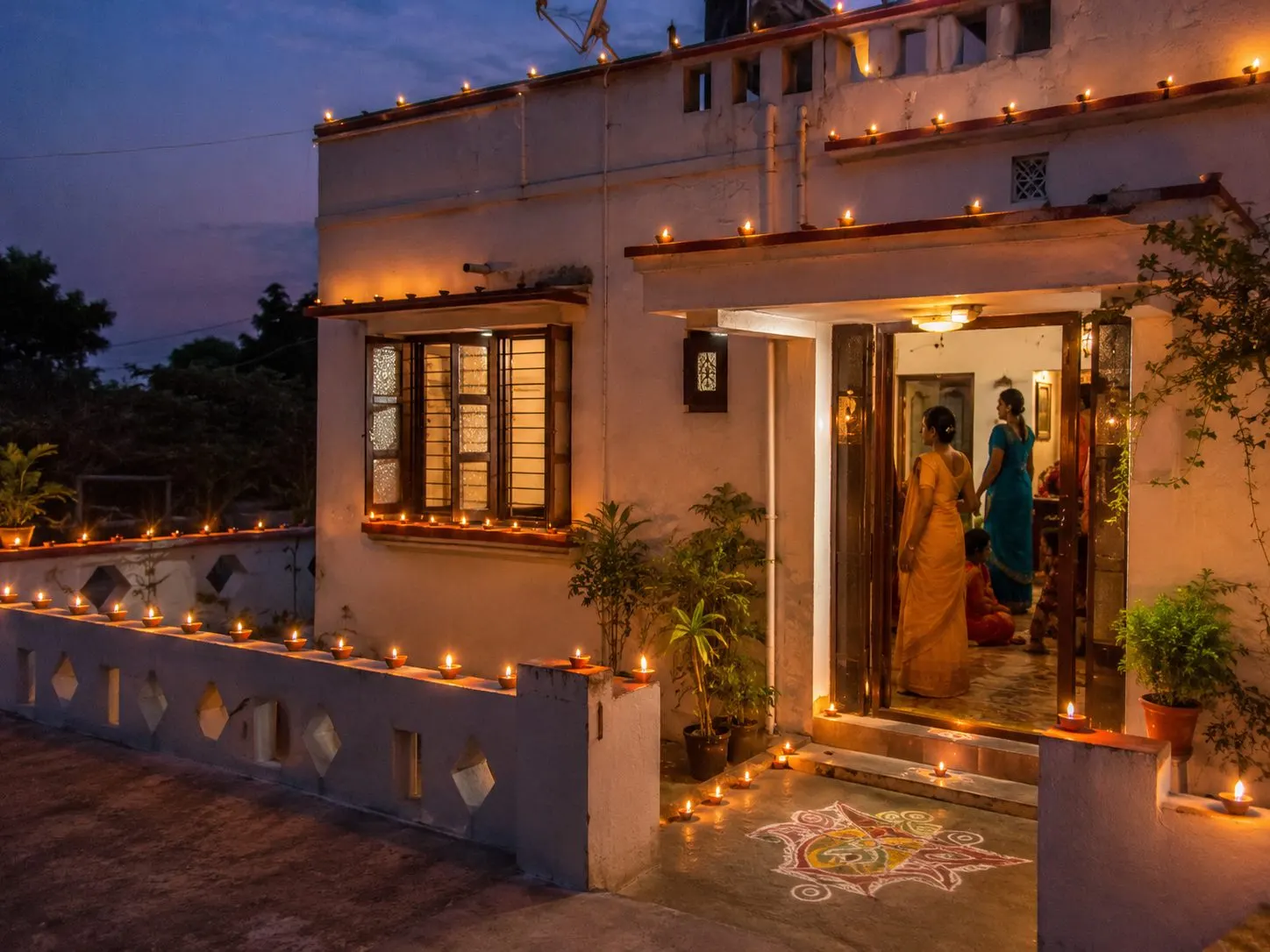 DiwaliWhat Diwali commemorates, why the reason differs by region, what happens on each of the five days, and how it is kept in households outside India.
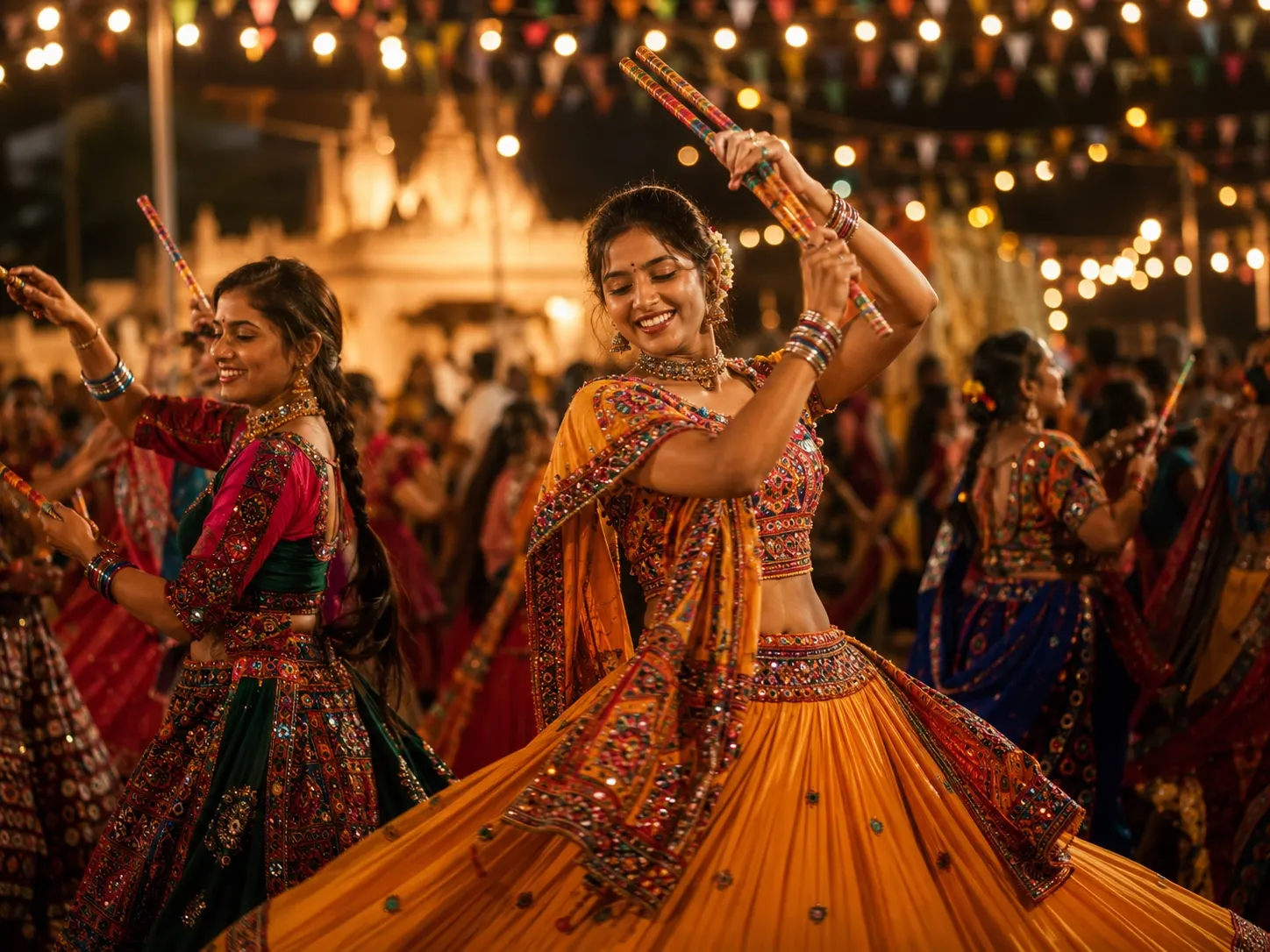 NavratriWhat Navratri marks, and why Gujarat's garba, Bengal's Durga Puja and Tamil Nadu's golu are the same nine nights kept in entirely different ways.
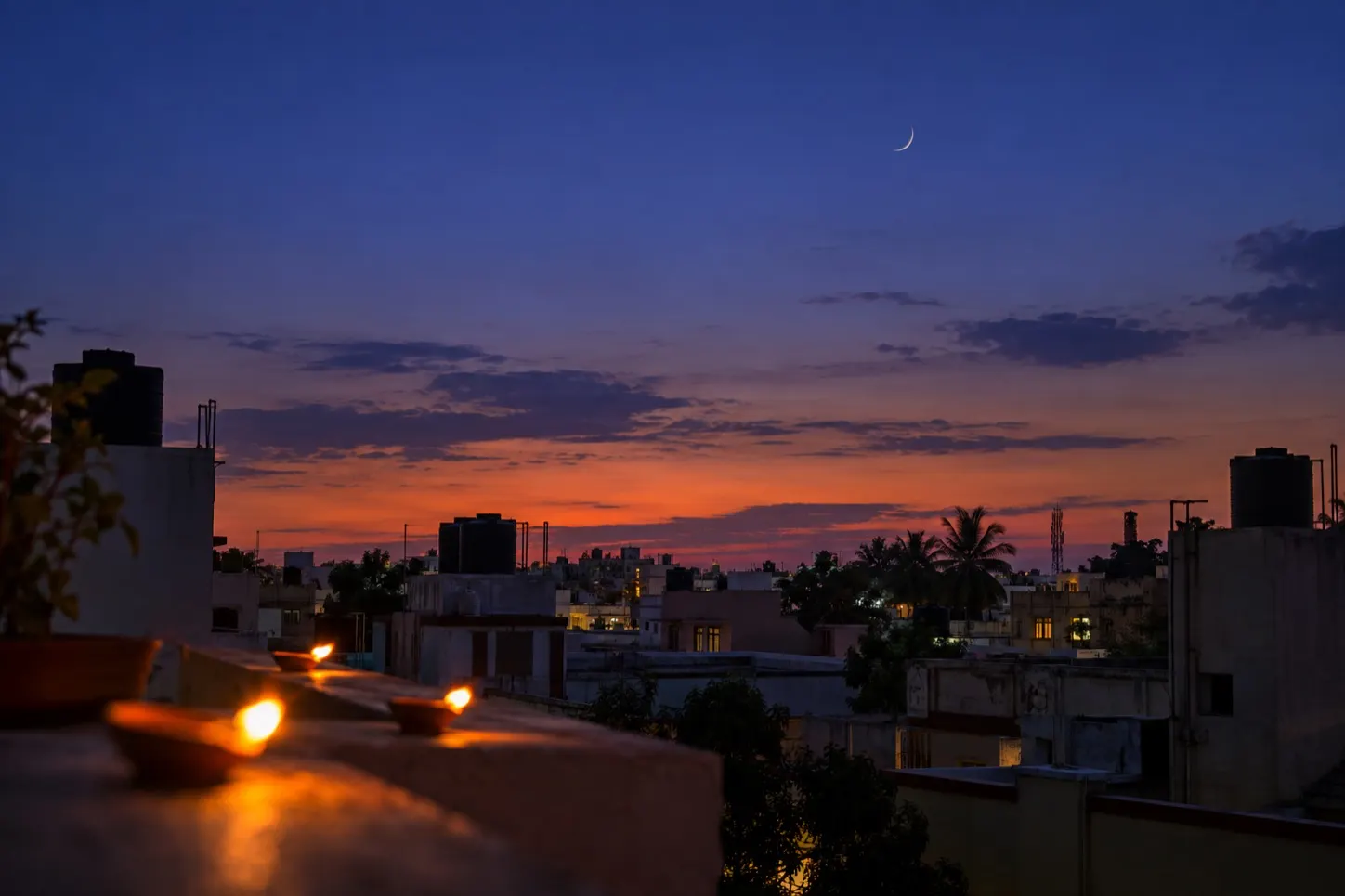 Festival calendarWhy Indian festival dates move every year, how the lunisolar calendar works, and why two calendars can disagree in the same year.
 Ganesh ChaturthiWhat happens across the ten days of Ganesh Chaturthi, why the public festival was built in the 1890s, and the immersion problem it now carries.
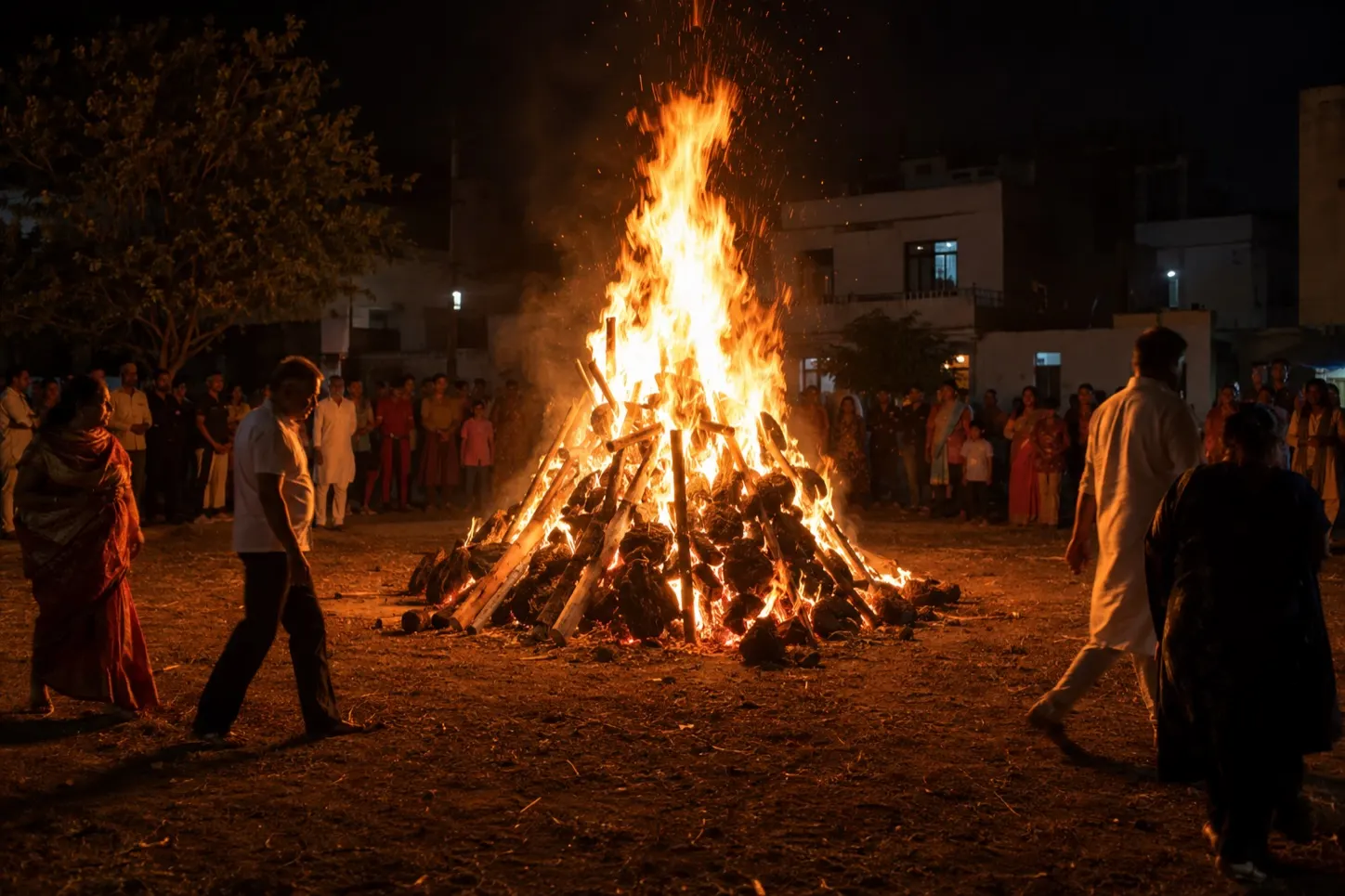 HoliThe Holika bonfire the night before, what the colour is for, the Braj traditions behind it, and the parts of the festival that get uncomfortable.
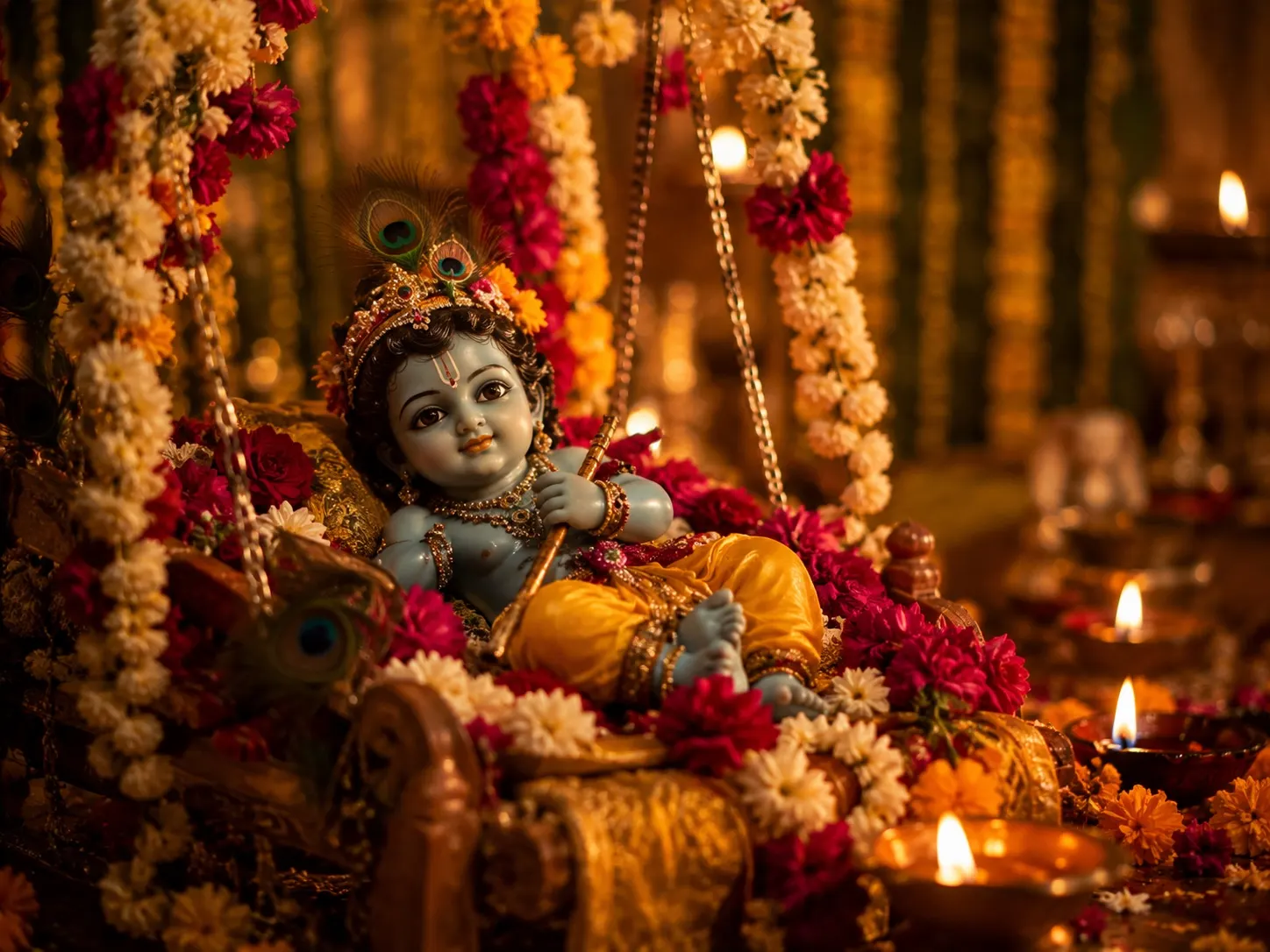 JanmashtamiWhy Janmashtami falls on two different days, what happens at midnight, and how the festival differs between Mathura, Maharashtra and the south.
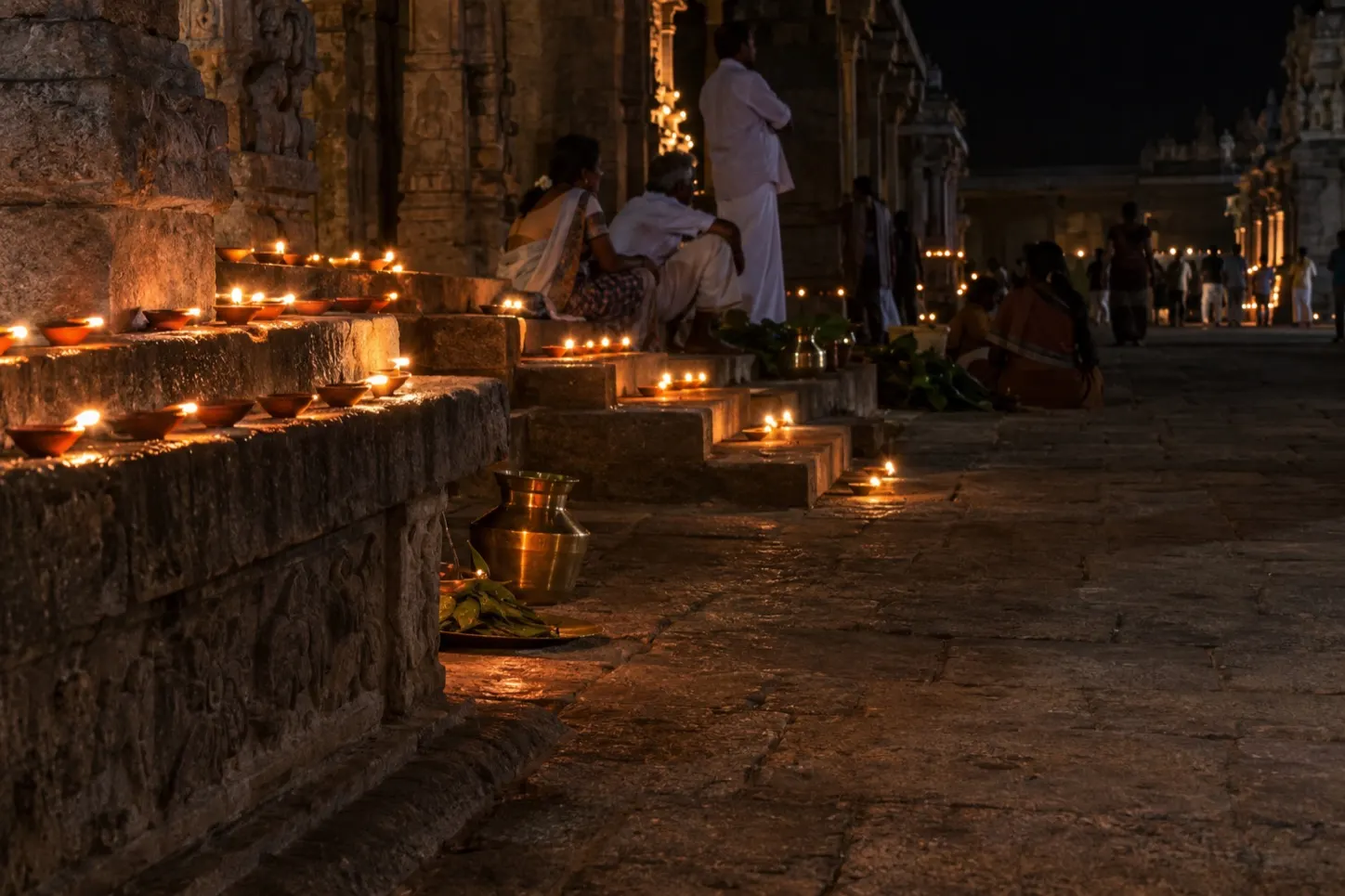 Maha ShivaratriWhat Maha Shivaratri marks, why it is kept as a night vigil in four watches, what is offered on the linga, and how observance differs by region.
Questions people ask
Why are Indian festivals on different dates every year?
Many Hindu festivals are tied to a lunar tithi rather than a Gregorian date. Because the lunar and solar calendars do not line up exactly, the civil date moves. Location and the rule used for a particular observance can matter too.
Why do North and South India sometimes use different month names for the same festival?
Different regional month systems are in use. Pūrṇimānta reckoning ends the month at the full moon, while Amānta reckoning ends it at the new moon. The same festival night can therefore be described under different month names without either being wrong.
Is Diwali the same everywhere in India?
No. The length, sequence and religious emphasis vary by region. In Bengal, Kali Puja commonly falls on the same amāvasyā night and should not simply be treated as another name for Lakshmi Puja.
Is Navratri only once a year?
No. The two best-known cycles are Sharada Navratri in autumn and Chaitra Navratri in spring. Rama Navami falls on the ninth lunar day of the Chaitra cycle, which is a connection most overviews leave out.
Is Makar Sankranti the winter solstice?
No. Makar Sankranti follows the Sun's entry into the sidereal sign Makara. The astronomical winter solstice occurs in December, and the two no longer coincide.
Did Bal Gangadhar Tilak invent Ganesh Chaturthi?
No. Ganesha worship and public celebration both predate him. His role was in expanding and politicising the organised sarvajanik Ganapati festival in Maharashtra from 1893, after public Ganapati activity was already documented in Pune in 1892.
Sources (17)
- Robert Sewell and Sankara Balkrishna Dikshit, The Indian Calendar (1896) — For the structure of the lunisolar calendar, the tithi and the intercalary month
- Report of the Calendar Reform Committee (Council of Scientific and Industrial Research, 1955), chaired by Meghnad Saha — For the reckoning behind the regional calendars, and for the sidereal basis of Makar Sankranti
- Diana L. Eck, India: A Sacred Geography (Harmony Books, 2012) — For regional festival practice, and for Kumbh Mela as pilgrimage and sacred geography rather than festival
- Joyce Burkhalter Flueckiger, Everyday Hinduism (Wiley-Blackwell, 2015) — For why the same festival is kept differently from one household and region to the next
- Rachel Fell McDermott, Revelry, Rivalry, and Longing for the Goddesses of Bengal (Columbia University Press, 2011) — For Kali Puja on the Diwali amāvasyā, and why it is not simply Bengali Diwali
- June McDaniel, Offering Flowers, Feeding Skulls: Popular Goddess Worship in West Bengal (Oxford University Press, 2004) — For goddess worship in Bengal alongside the Diwali period
- Constance A. Jones and James D. Ryan, Encyclopedia of Hinduism (Facts On File, 2007) — Entries on Navaratri and Rama Navami, for the spring and autumn cycles
- UNESCO, Garba of Gujarat, Representative List of the Intangible Cultural Heritage of Humanity, Decision 18.COM 8.B.32 (2023) — For the 2023 inscription
- McKim Marriott, 'The Feast of Love', in Village India: Studies in the Little Community (University of Chicago Press, 1955) — For Holi as an inversion of ordinary social rules
- Norvin Hein, The Miracle Plays of Mathura (Yale University Press, 1972) — For Krishna performance traditions in the Braj region
- Raminder Kaur, 'At the Ragged Edges of Time: The Legend of Tilak and the Normalization of Historical Narratives', South Asia Research 24, no. 2 (2004): 185–202 — For how the legend of Tilak as sole founder of the public Ganapati festival was constructed
- Richard I. Cashman, The Myth of the Lokamanya: Tilak and Mass Politics in Maharashtra (University of California Press, 1975) — Especially 'The Political Recruitment of God Ganapati', for Tilak's actual role from 1893
- John Stratton Hawley, Krishna: The Butter Thief (Princeton University Press, 1983) — For Krishna devotional traditions behind Janmashtami
- Edwin F. Bryant, ed., Krishna: A Sourcebook (Oxford University Press, 2007) — For the sources on Krishna's birth and its observance
- Stella Kramrisch, The Presence of Śiva (Princeton University Press, 1981) — For Shiva and the character of the Maha Shivaratri night vigil
- Axel Michaels, Hinduism: Past and Present (Princeton University Press, 2004) — For festival observance, fasting and vigil in practice
- UNESCO, Kumbh Mela, Representative List of the Intangible Cultural Heritage of Humanity (2017) — For the 2017 inscription
Fact-checked by Ajay Gupta on 7 September 2026.
Something wrong here? Tell us — corrections are made in the open, and our editorial standards set out what checking a page involves.