Travel
A first trip to India — how to plan it
The most common mistake is distance. The second is going in May.
The short answer
For a first trip of two to three weeks, pick one region and stay in it. India is the size of Europe, internal distances are long, and the trips people remember badly are the ones that tried to combine Delhi, Kerala and Varanasi in twelve days.
Pick one region
The single most useful decision, and the one most first-timers get wrong.
India is roughly the size of the European Union and considerably less uniform. Delhi to Kochi is a four-hour flight. Assuming you can combine the Himalaya, Rajasthan and the Kerala backwaters in two weeks produces a trip spent in airports.
Four workable first-trip regions:
- The north-west — Delhi, Agra, Jaipur, and Rajasthan beyond it. Forts, palaces, desert, the most concentrated sightseeing in the country. See the Golden Triangle.
- Kerala and the deep south — backwaters, hill stations, temple towns, and the easiest introduction for anyone travelling with children or hesitant companions.
- Varanasi and the Gangetic plain, sometimes with Khajuraho or Bodh Gaya. Intense, and best for a second trip or a determined first one.
- Mumbai and the Deccan — the city, Ajanta and Ellora, and Goa or the Konkan coast.
When to go
November to February for weather in most of the country. The north is genuinely cold in December and January, with fog disrupting flights and trains in Delhi; the south is pleasant.
March is warm and workable. April to June is severe in the plains and the interior; the hill stations exist because of it.
The monsoon, roughly June to September, varies by region. Kerala and the Western Ghats are beautiful in it. Rajasthan is not.
Moving around
Trains for journeys under about eight hours. Book as soon as the reservation window opens — popular routes fill months out. AC chair car or AC 2-tier for comfort; sleeper class is an experience with a lower floor than most first-time visitors expect.
Flights for long hops. Cheap, frequent, and they save a day.
A car with a driver for regional touring, which is the standard way to do Rajasthan or Kerala and costs less than most visitors assume. See cars and pickups.
In cities, app-based cabs and autos. Agreeing a fare in advance or insisting on the meter avoids the most common irritation of the trip.
What arrival is actually like
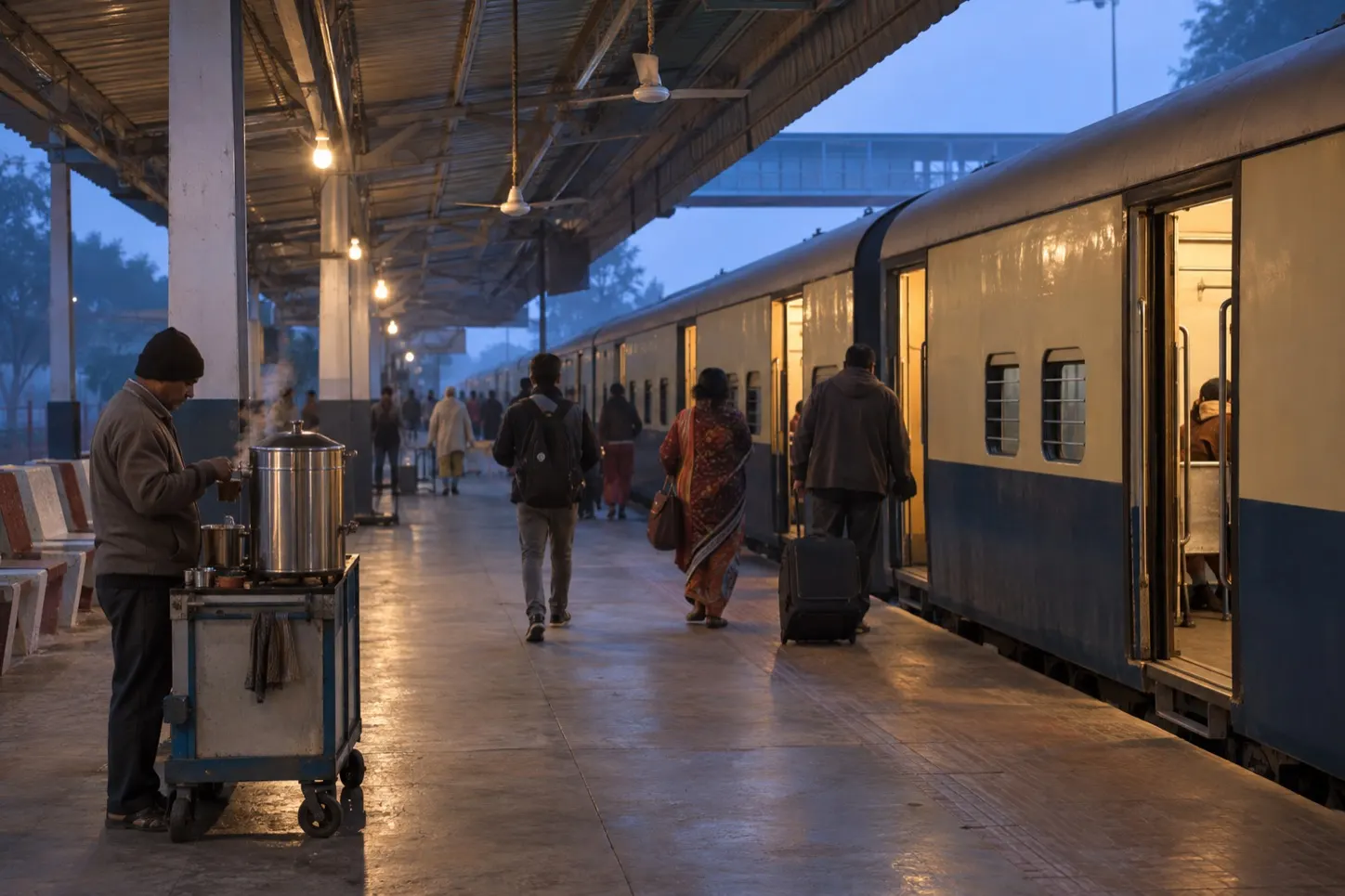
Loud, hot, crowded, and faster than you expect. The airports are modern and efficient; the twenty minutes outside them are the adjustment.
Two things make the first day much better: a pre-booked pickup, so the first negotiation of the trip does not happen at two in the morning; and a first night's hotel booked at a level above what you would normally pay, because arriving tired into somewhere comfortable sets the tone for the rest.
The mistakes that spoil first trips
- Too many places. Two nights minimum, three where you can.
- Overplanning the days. Mornings and evenings; write off the middle of the day in most seasons.
- Water and food carelessness in the first week. Bottled or filtered water, hot cooked food, and caution with ice and salads for the first few days while your system adjusts.
- Not carrying cash. UPI is universal for Indians and awkward for visitors; cards work in formal establishments and not at the stall you actually want to buy from.
- Believing the first quoted price. For an auto, a souvenir or a "special today" tour.
- Booking a driver who is also a guide who is also a shopping consultant. The commission structure at emporiums is the oldest arrangement in Indian tourism.
How this changes across India
| Region | What a first trip gets |
|---|---|
| Rajasthan and the north-west | Forts, palaces, desert, camel country; the most photographed India, and the most touristed. |
| Kerala | Backwaters, spice hills, Kochi, temple festivals; the gentlest introduction, and the best for children. |
| Tamil Nadu | Temple towns on a scale nowhere else matches; heavier going in the heat and worth the effort. |
| Himalaya | Ladakh, Himachal, Uttarakhand, Sikkim; seasonal, altitude-dependent, and a completely different country from the plains. |
| North-east | Assam, Meghalaya, Arunachal; least visited, permits required in some states, and the most rewarding second or third trip. |
Questions people ask
How long should a first trip be?
Two weeks is workable for one region; three is comfortable. Under ten days, restrict yourself to one city and its surroundings — the flying time alone eats two days, and jet lag from North America eats another.
Train or plane?
Both. Trains are excellent for journeys under about eight hours and are worth doing at least once for their own sake; book well ahead, as popular routes sell out weeks in advance. Domestic flights are cheap and save a day on long hops.
Is it safe?
For most visitors, yes, with ordinary precautions. Petty theft and overcharging are the common problems. Women travellers, including Indian women, take more precautions than in Western Europe — avoiding travelling alone at night, using pre-booked cars rather than street hires. Read current advice from your own foreign ministry.
How much should I budget?
Enormously variable. A comfortable mid-range trip — good hotels, private car with driver for some legs, restaurant meals — runs well above what people expect from India's reputation for cheapness. Budget travel remains genuinely inexpensive. The middle is where most visitors are surprised.
Sources (2)
- Government travel advisories from the visitor's own country — For current safety and entry requirements, which change
- Indian Railways booking and Indian Meteorological Department seasonal data — For train reservation windows and regional weather
Fact-checked by Ajay Gupta on 7 September 2026.
Something wrong here? Tell us — corrections are made in the open, and our editorial standards set out what checking a page involves.